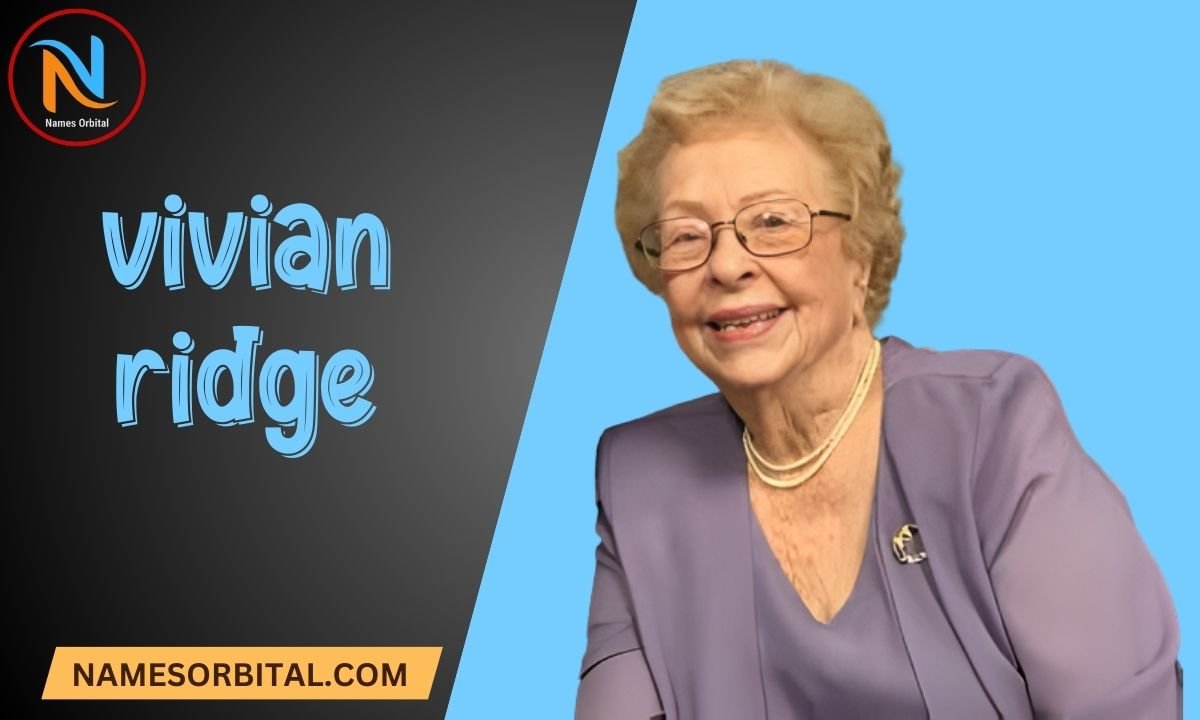
When people talk about Bob Ross, they picture a calm, curly-haired painter surrounded by happy little trees. What they rarely picture is the woman who stood beside him during his most formative years — quietly encouraging, deeply creative, and entirely devoted. That woman was Vivian Ridge, Bob Ross’s first wife, and her story deserves far more than a footnote.
From their shared love of art to the painful unraveling of their marriage, Vivian’s life is one of quiet resilience, private dignity, and enduring influence. This article tells that story fully — the love, the loss, and the lasting legacy she left behind.
Who Was Vivian Ridge?
Vivian Ridge was an American artist and former celebrity wife, best known as the first wife of legendary painter and television host Bob Ross. She was born and raised in Winston-Salem, North Carolina, where the rolling landscapes of the American South nurtured her early love for nature and creative expression.
She began painting as a hobby at just 12 years old — a detail that matters, because it means her artistic identity existed long before Bob Ross entered the picture. She wasn’t drawn into art through her husband. She arrived there herself. That distinction shaped the entire dynamic of their relationship.
Quick Profile Summary
| Detail | Information |
| Full Name | Vivian Ridge |
| Born | Winston-Salem, North Carolina, USA |
| Nationality | American |
| Ethnicity | Caucasian |
| Education | Art History, Wake Forest University |
| Married | 1965 |
| Divorced | 1977 |
| Ex-Husband | Bob Ross (Robert Norman Ross) |
| Son | Robert Stephen “Steve” Ross (born August 1, 1966) |
| Passed Away | May 3, 2018 (aged 71) |
| Estimated Net Worth | Approximately $1 million |
Vivian Ridge and Bob Ross: How Their Paths First Crossed
Vivian enrolled at Wake Forest University, where she pursued a degree in art history. It was during this period that she and Bob Ross first crossed paths. The precise circumstances of their meeting are not extensively documented, but the shared artistic world they inhabited made a connection natural and almost inevitable.
Bob Ross was, at the time, still serving in the United States Air Force, having enlisted in 1961 as a medical records technician. He rose through the career ranks and later became a master sergeant of the clinic at Eielson Air Force Base in Alaska. While stationed there, he began attending an art class at the Anchorage U.S.O. club — the moment that first lit the creative fire within him.
When he met Vivian, he was a man in transition: military by day, quietly becoming an artist in every other waking hour. Vivian, an art history student with years of painting experience behind her, represented the kind of creative companionship he was growing to need. Their connection was built on a foundation of shared passion — and that foundation ran deep.
Marriage and Early Family Life
In 1965, Vivian and Bob tied the knot and remained together until 1977. The couple had a son, Robert Stephen Ross, on August 1, 1966.
The early years of their marriage were shaped by the rhythms of military life. Relocations were frequent, periods of separation were unavoidable, and stability was something that had to be built deliberately rather than assumed. Through all of it, Vivian held things together. She was the steady presence in a life defined by movement and change.
Their son Steve arrived just a year into the marriage, and fatherhood gave Bob a new kind of anchor. The Ross household became a creative home — both parents painting, both instilling a love of art in their son from the earliest possible age. Steve would grow up surrounded by art, watching both his parents paint, and eventually became a painter and art instructor himself.
Vivian Ridge’s Role in Bob Ross’s Artistic Awakening
This part of the story rarely gets told, but it matters enormously. Bob Ross’s transition from military serviceman to full-time artist didn’t happen in a vacuum. It happened while he was married to Vivian, and her support was central to that shift.
During their marriage, Bob Ross transitioned from military life to pursuing art full-time, and Vivian stood by his side as he navigated this change, providing emotional support and encouragement.
Her own background in art history gave her credibility as a creative partner — not just a supportive spouse. She understood composition, technique, and the history of visual expression. When Bob developed his interest in landscape painting and began exploring the wet-on-wet oil painting technique that would later define his career, Vivian was there, engaged and invested.
Some stories even hint that she may have helped Bob in the early stages of developing The Joy of Painting show, though her exact role remains unclear. Whether that’s confirmed or not, the influence of a creative, educated, artistically passionate partner on a developing painter cannot be dismissed.
The Emotional Strain of Change and Growing Distance
As Bob’s ambitions grew, so did the pressures on their marriage. The demands of building an artistic career, developing instructional content, and seeking wider recognition created a lifestyle that was increasingly difficult to sustain alongside a stable family home.
As Bob’s career gained momentum, the demands and pressures associated with his rising fame began to strain their relationship. Reports over the years have suggested that infidelity on Bob’s part contributed to the growing emotional distance between them. Neither Vivian nor Bob ever spoke publicly about the specifics — and that restraint itself says something about both of them.
What’s clear is that by the mid-1970s, the partnership that had once been so generative had become unsustainable. Twelve years of love, shared creativity, and family building were coming to an end.
Divorce and Life After Bob Ross
Vivian and Bob divorced in 1977 after twelve years together, citing irreconcilable differences. Steve was just 11 years old.
What Vivian did next is a masterclass in quiet dignity. She didn’t seek the spotlight. She didn’t grant interviews. She didn’t attempt to reshape the public narrative around her marriage or her ex-husband.
After the divorce, Vivian Ridge largely disappeared from public life. She reportedly moved into real estate, a practical career that provided financial stability while allowing her to continue painting privately. Unlike many former spouses of celebrities, she never attempted to monetize her connection to Bob Ross. There were no tell-all interviews, no memoirs, no talk show appearances.
She simply built a life of her own — on her own terms, in her own time.
Vivian Ridge as the Mother of Steve Ross
If Vivian’s influence on Bob Ross is underappreciated, her influence on Steve Ross is almost entirely invisible in public discourse — and that’s the greater loss.
Steve didn’t just inherit his father’s talent. He was raised by a woman who had been painting since childhood, who studied art history at university level, and who created a home where artistic expression was treated as something serious and meaningful. Vivian embraced her role as a nurturing mother, and Steve’s appearances on The Joy of Painting served as a bridge between Vivian’s quiet support and Bob’s larger-than-life persona.
After the divorce, Steve stayed with his mother until her passing. Their bond was deep and lasting — and when Vivian died, Steve carried her memory forward in the most personal way possible: he stayed with his mother until her death, after which he lived with his father, who raised him single-handedly.
Steve went on to become a certified instructor in the wet-on-wet painting technique — the same technique Vivian had watched Bob develop during their marriage. The artistic lineage runs directly through her.
Also Read This Celebrity: Dylan Thomas Andrews
Bob Ross’s Rise to Fame and Vivian Ridge’s Absence from the Narrative
The Joy of Painting premiered in 1983, six years after Vivian and Bob divorced. By then, Bob had remarried twice and built an entirely new professional identity. The version of Bob Ross that became a global television phenomenon — warm, gentle, encouraging, surrounded by mountains and birch trees — was shaped significantly by experiences that came after Vivian.
That timing has contributed to her erasure from the popular story. Most people who discovered Bob Ross through reruns or the Netflix documentary never encountered Vivian’s name at all. She belonged to an earlier chapter — the formative chapter — and mainstream coverage skipped straight to the famous one.
But the formative chapter is where character is built. And Bob Ross’s character was built, in significant part, during the twelve years he spent with Vivian.
Newly Discovered Perspectives on Vivian Ridge
Recent years have seen a gradual effort to recover Vivian’s story from the margins of Bob Ross history. Biographical articles and retrospective profiles have begun piecing together a fuller picture of who she was:
- An artist from childhood who pursued formal academic training in her field
- A creative partner who supported her husband’s transition from military career to artistic identity
- A devoted mother who raised a son who carried on a remarkable family legacy
- A private individual who exercised genuine agency over her own narrative
Reflecting on Vivian’s legacy, it’s evident that her influence extended beyond her role as Bob Ross’s first wife. She was a foundational figure during the early stages of Bob’s artistic journey, providing emotional and moral support as he transitioned from a military career to becoming a beloved art instructor and television personality.
Why Vivian Ridge Chose Privacy Over Public Recognition
Some people retreat from public life because they are forced to. Vivian chose it. And the consistency of that choice across four decades suggests it wasn’t avoidance — it was preference.
She was described by those who knew her as gentle, thoughtful, and deeply committed to the people she cared about. Fame held no obvious appeal for her. She had her art, her son, and her own quiet community. That was enough.
While Bob remains a celebrated figure in art, Vivian chose a path less illuminated by the spotlight. Her marriage to Bob marks a chapter in the artist’s life that contributed to his personal and professional narrative.
In an age obsessed with visibility, Vivian’s deliberate invisibility reads as a kind of integrity.
Vivian Ridge’s Place in Bob Ross’s Personal History
Bob Ross married three times. Each relationship left its mark:
| Wife | Married | Ended | Key Role |
| Vivian Ridge | 1965 | 1977 (divorce) | First wife; mother of Steve Ross; present during artistic formation |
| Jane Lee Zanardelli | 1977 | 1992 (death from cancer) | Second wife; business partner in Bob Ross Inc. |
| Lynda Brown | 1995 | 1995 (Bob’s death) | Third wife; married just months before Bob’s passing |
After parting ways with Vivian, Bob found love again with Jane Lee Zanardelli. Jane was a student whose interest in oil painting drew her to his classes. She soon became not just his wife but also his business partner.
Vivian’s chapter was the first and, in many ways, the most foundational. It was during their marriage that Bob became the artist he would spend the rest of his life being.
Public Curiosity and Online Searches About Vivian Ridge
Interest in Vivian Ridge has grown steadily alongside the broader Bob Ross revival. Younger audiences who discovered him through streaming platforms, memes, and retrospective documentaries began asking the natural question: who was the woman behind the early years?
That curiosity is legitimate and worthwhile. Understanding Bob Ross’s personal history fully requires understanding Vivian — her artistic background, her role in his development, her motherhood, and her choice to live privately after their marriage ended.
Vivian Ridge passed away on May 3, 2018, after a battle with cancer. She was seventy-one years old. Her death drew very little media attention, which almost certainly would have suited her just fine.
Final Thoughts
Vivian Ridge was never a footnote. She was a chapter — a long, significant, formative chapter in the life of one of America’s most beloved artists. She brought her own artistic identity to a marriage, supported a man through an extraordinary career transition, raised a son who carries their shared legacy, and then chose to live the rest of her life exactly as she wished: quietly, privately, and on her own terms.
Her story asks us to look more carefully at the people who stand beside the famous — not because they bask in reflected light, but because they so often provide the light in the first place.
Frequently Asked Questions
Who was Vivian Ridge?
Vivian Ridge was an American artist and the first wife of Bob Ross, the beloved television painter. She was born in Winston-Salem, North Carolina, and married Bob in 1965.
When did Vivian Ridge and Bob Ross get married?
Vivian and Bob married in 1965 and remained together for twelve years before divorcing in 1977.
Why did Vivian Ridge and Bob Ross divorce?
Their divorce is attributed to irreconcilable differences, with some reports suggesting that Bob’s infidelity played a role, though neither party ever spoke publicly about the details.
Did Vivian Ridge have children?
Yes. The couple had a son, Robert Stephen Ross, on August 1, 1966, who became a professional painter and certified instructor known as Steve Ross.
What happened to Vivian Ridge after the divorce?
After the divorce, Vivian lived a quiet life away from public attention, reportedly working in real estate while continuing to paint privately.
When did Vivian Ridge die?
Vivian Ridge passed away on May 3, 2018, after a battle with cancer, at the age of seventy-one.
What is Vivian Ridge’s legacy?
Her legacy lives through her son Steve Ross’s continued work in art and painting instruction, and through her foundational role in supporting Bob Ross’s artistic development during his most formative creative years.

Shoaib is an experienced content writer at NamesOrbital.com, specializing in name-related topics. He creates well-researched, creative, and easy-to-understand content focused on animal names, team names, group names, and unique naming ideas. With a strong passion for words and SEO-friendly writing, Shoaib helps readers discover meaningful, catchy, and memorable names for every purpose. His goal is to make name selection simple, fun, and inspiring for everyone.